

BBC Master Turbo

One of the big differences between the Master Series and the BBC Model B was the way in which second processors were dealt with. Whilst the Master could take the external cheese wedges which plugged into the Tube connector, there were internal connectors provided on the Master motherboard to allow specially designed internal co-processor boards to be added.
The Master Turbo drew upon this new internal architecture. Addition of Acorn's internal 65C102 co-processor turned the Master 128 into the Master Turbo, able to run programmes twice as fast as the standard machine by freeing up the Master's processor to do the donkey work of running the keyboard, screen, disc interface and so on whilst leaving the co-processor CPU to execute user programmes. The Master Series operating system had the Tube host code included unlike the BBC Model B which required additional code for the use of external Second Processors supplied in the DNFS ROM.
The picture above is the Turbo co-processor from my Domesday Machine. The one below shows the insides of Station 200 with the 65C102 co-processor in situ.
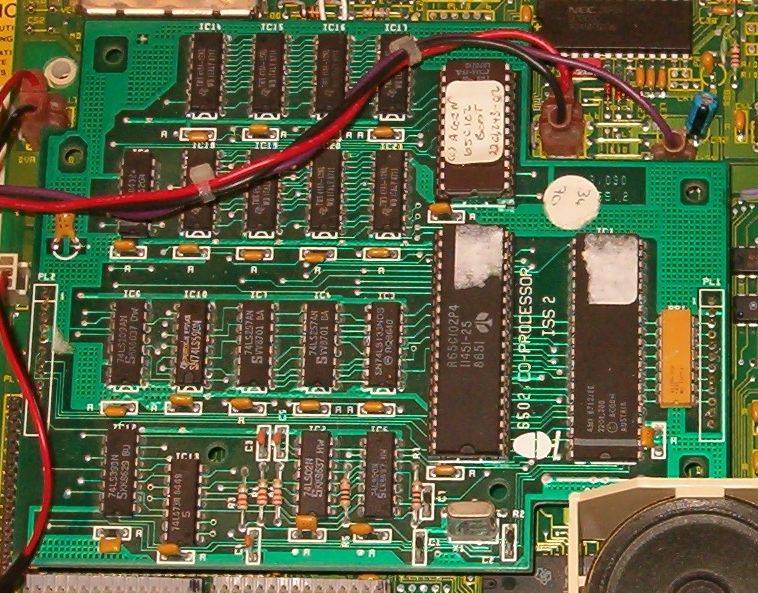
The three main chips on the board are the 65C102 processor itself, the Tube ULA chip and the 65C102 boot ROM. In addition, there is 64K of RAM on board plus plenty of 74 series logic chips, resistors and capacitors.
The board plugs into the Master motherboard by two plugs at the left and right hand edges of the board. The co-processor draws its power this way so there are no additional connections to be made.